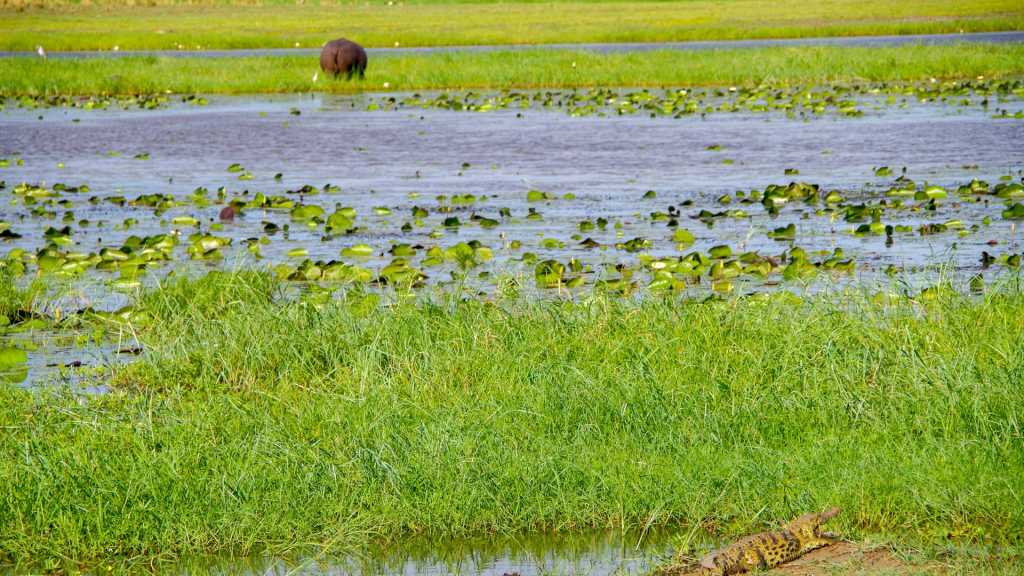
A small peaceful village nestled along the majestic Okavango River, Divundu is a preferred stop in north-eastern Namibia. Located on the route of the Caprivi Strip, it offers a serene riverside atmosphere and direct access to some of the country’s most beautiful wildlife sanctuaries. Game drives in 4x4 vehicles, sunset boat cruises, and sightings of hippos shape the experience in this greener and more secluded region.
Nearby, the Popa Falls form a series of spectacular rapids where the Okavango spreads across its full width. The area is particularly popular for boat excursions and birdwatching, with a wide variety of species thriving along the riverbanks
Divundu is best known for its strategic location at the gateway to Bwabwata National Park, a vast protected area stretching for several hundred kilometers along the Caprivi Strip. This unique park in Namibia stands out for the coexistence of wildlife and local communities. Large herds of migrating elephants can be seen there, along with buffalo, hippos, and numerous predators. Its diverse environment — riverine forests, floodplains, and wooded savannas — makes it a rich ecosystem that remains largely untouched by mass tourism.
Further south, the Mahango Game Reserve, incorporated into Bwabwata, is considered one of the best wildlife-viewing sites in north-eastern Namibia. Concentrated within a smaller area, wildlife is particularly abundant: elephants, rare antelopes such as roan and tsessebe, giraffes, crocodiles, and an impressive variety of water birds thrive along the banks of the Okavango. The open landscapes provide exceptional photographic safari opportunities, especially in the late afternoon when the light turns the savanna golden.
Long and thin appendage in northeastern Namibia, the Caprivi (or the Caprivi Strip) is unlike any other region in Namibia. It enjoys a tropical climate with the warmest winters and heavy rainfall all over the country.
Most land is placed in some form of environmental protection. The variety of local ecosystems - river basins, flood plains, forests, mopane savannah and acacias - promotes an intense wild life ... for the rest of Namibia, the water resources of Caprivi (Zambezi and Kwando are two perennial rivers) are an extraordinary luxury ...
Advices:
- It is possible to reach the area by road either from northern Namibia (via Rundu) or through Boswana (Chobe to the east or Sakawe to the northwestern Okavango Delta)
- The area is flat: one-third of Eastern Caprivi is likely to be flooded in the rainy season! It is therefore necessary to take tgis fact into acount when traveling in Caprivi
- Most travelers just pass through this Caprivi Strip to reach Victoria Falls from Namibia - or vice versa ... however, the area is home to unsuspected treasures that deserve some of the usual sightseeing tours (Bwabwata, Mamili, Mudumu) ...
The Great Namibia
Namibia, what else could we ask for? Almost permanent sunshine, great variety of landscapes with wild beauty, national parks rich in fauna and flora. In the West, the Namib desert, the oldest on the planet, the world highest dunes. In the South, the Fish River Canyon, the biggest after the Colorado. In the North, the largest national park in Africa: Etosha. A captivating country with extraordinary natural riches, Namibia deserves its nickname "Jewel of Africa".
When to go?
Subtropical and dry with warm days and cool nights. During the southern summer (from November to March), temperatures vary from 16 to 34°C and in desert areas they can reach 40 to 45°C. In winter (from June to August), they range from 4 to 22℃ and sometimes fall below 0℃ on the relief or in the desert.
The best season to go to Namibia is during the first weeks of November and April. Its not the peak season and the conditions of visit are good. If the high season (May to October) wins the prize of the best climate. Its not necessarily the best because tourists are the most numerous. The rainy season should be avoided if there are plans to explore national parks.
Formalities
The passport must include two blank pages and still be valid for 6 months after the expected date of exit from Namibia. The visa is not compulsory for French nationals. Holders of a French passport are granted tourist visa permits for a maximum of 90 days, which are issued free of charge upon arrival, in particular for immigration checks at Windhoek airport.
For any minor child: a multilingual extract of birth certificate (or an unabridged birth certificate translated into English - certified translation) is required to enter and leave Namibia (in the case of a child traveling with his 2 parents). Please consult the official sites for more information about all the requested documents according to your case.
Health
No vaccination is required for entry into Namibia.
Anti-malarial treatment is recommended (see your doctor). However, it is advisable to check the updating of your usual reminders and vaccinations as for any trip.
Currency
The currency in Namibia is the Namibian dollar (NAD).
Bank cards and traveller’s checks are widely accepted in Namibia, except for the purchase of gasoline especially inside the parks. Major credit cards are accepted in most shops, restaurants and hotels.
Banks and foreign exchange offices make the exchange of your currencies
For your payments, do not hesitate to use the South African rand.
SOUTH AFRICA NAMIBIA BOTSWANA ZIMBABWE ZAMBIA KENYA TANZANIA MOZAMBIQUE MAURITIUS REUNION