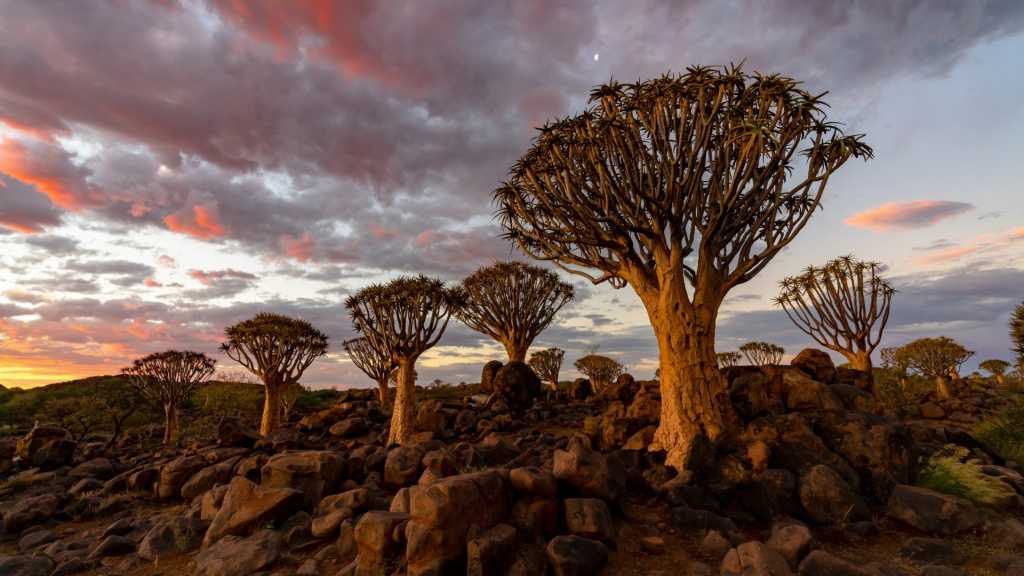
Keetmanshoop, in southern Namibia, is a welcoming town that opens the way to some of the country’s most striking natural sites. Set amid rugged hills, dramatic rock outcrops, and vast semi-arid plains, it offers an authentic introduction to Namibia’s raw and untamed landscapes. Known for its remarkable geological features and distinctive desert scenery, the area has become a key stop for travelers journeying through the southern regions.
Nearby, Giants Castle towers prominently over the landscape, its massive rock formations creating a powerful natural landmark. From its elevated vantage points, visitors can enjoy wide-ranging views across the savanna and surrounding valleys, making it an appealing destination for walking and exploration. The warm hues of the stone, set against the clear African sky, create particularly striking scenes in the soft light of early morning and late afternoon.
Close to Keetmanshoop, the Quiver Tree Forest is a remarkable natural site where hundreds of quiver trees (Aloidendron dichotomum) stand like living sculptures across the desert landscape. This iconic forest is a favorite destination for photography, observing endemic plant life, and gaining insight into the fragile desert ecosystem. A visit to Keetmanshoop and its surroundings brings together geology, biodiversity, and dramatic scenery, offering a captivating glimpse into the unique character of southern Namibia.
The vast arid plains of the « Great South » may seem inhospitable and yet this region reserves some surprises: cities swallowed by desert sands to the mighty cliffs of the Fish River Canyon.
Advices:
- The south of Namibia with the Kalahari – including the Kalahari Transfrontier Park on the borders of Botswana, South Africa and Namibia – can justify a trip on its own right...
- As you pass Aus, do not miss the opportunity to go out and find the horses that live in the vast desert plains. Descendants of the horses of the German cavalry, they are perfectly adapted to desert conditions and are part of the last wild horses in the world!
- At the border with South Africa, the Orange River offers very good conditions for rafting or canoeing from one to several days.
The Great Namibia
Namibia, what else could we ask for? Almost permanent sunshine, great variety of landscapes with wild beauty, national parks rich in fauna and flora. In the West, the Namib desert, the oldest on the planet, the world highest dunes. In the South, the Fish River Canyon, the biggest after the Colorado. In the North, the largest national park in Africa: Etosha. A captivating country with extraordinary natural riches, Namibia deserves its nickname "Jewel of Africa".
When to go?
Subtropical and dry with warm days and cool nights. During the southern summer (from November to March), temperatures vary from 16 to 34°C and in desert areas they can reach 40 to 45°C. In winter (from June to August), they range from 4 to 22℃ and sometimes fall below 0℃ on the relief or in the desert.
The best season to go to Namibia is during the first weeks of November and April. Its not the peak season and the conditions of visit are good. If the high season (May to October) wins the prize of the best climate. Its not necessarily the best because tourists are the most numerous. The rainy season should be avoided if there are plans to explore national parks.
Formalities
The passport must include two blank pages and still be valid for 6 months after the expected date of exit from Namibia. The visa is not compulsory for French nationals. Holders of a French passport are granted tourist visa permits for a maximum of 90 days, which are issued free of charge upon arrival, in particular for immigration checks at Windhoek airport.
For any minor child: a multilingual extract of birth certificate (or an unabridged birth certificate translated into English - certified translation) is required to enter and leave Namibia (in the case of a child traveling with his 2 parents). Please consult the official sites for more information about all the requested documents according to your case.
Health
No vaccination is required for entry into Namibia.
Anti-malarial treatment is recommended (see your doctor). However, it is advisable to check the updating of your usual reminders and vaccinations as for any trip.
Currency
The currency in Namibia is the Namibian dollar (NAD).
Bank cards and traveller’s checks are widely accepted in Namibia, except for the purchase of gasoline especially inside the parks. Major credit cards are accepted in most shops, restaurants and hotels.
Banks and foreign exchange offices make the exchange of your currencies
For your payments, do not hesitate to use the South African rand.
SOUTH AFRICA NAMIBIA BOTSWANA ZIMBABWE ZAMBIA KENYA TANZANIA MOZAMBIQUE MAURITIUS REUNION